Shopify's 2026-07 Admin GraphQL release turns collections from a single rule set into a multi-source model. That reads like an API detail. It reaches any custom app or operational workflow that creates, edits, synchronizes or reasons about collections on a large storefront.
The short answer
Move complex builds onto the 2026-07 Collections API before you rely on the new collection model anywhere. A collection can now combine typed conditions, manual inclusions and exclusions, and other supported sources. Older API versions cannot represent collections that use the new features and may leave them out of collection queries, so test your versioning and your data-model assumptions rather than assuming they carried over.
What changed in the Collections API?
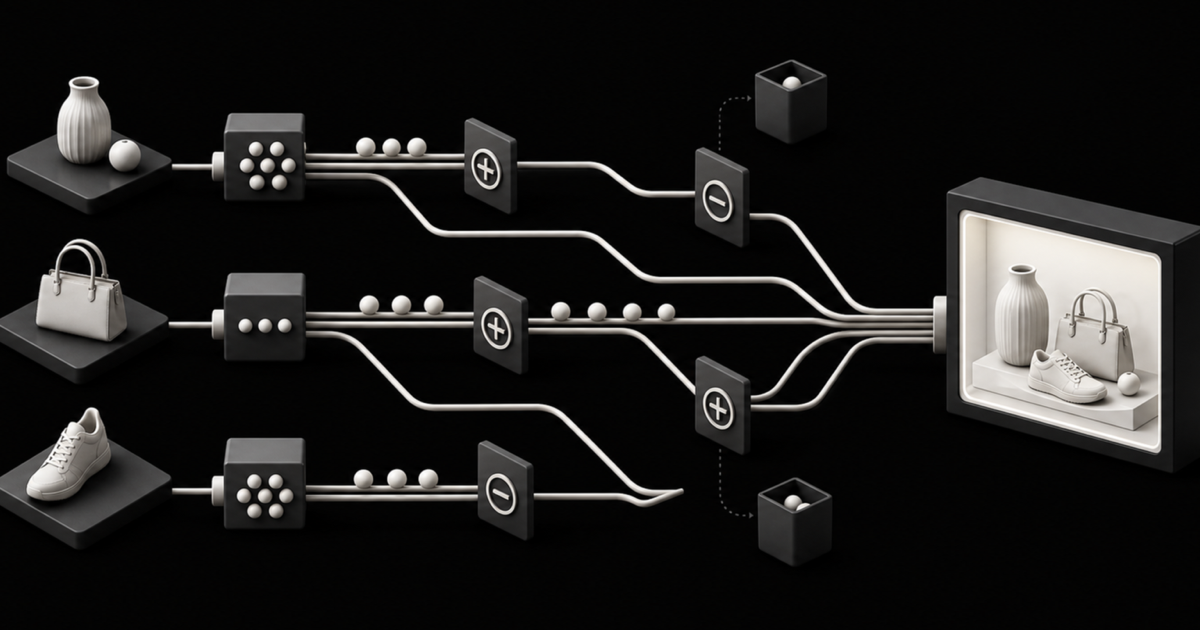
The new model replaces a collection's single ruleSet with one or more CollectionSource objects. Shopify documents typed inclusion and exclusion conditions, manual selections and subcollection sources, and adds variant-level collection membership fields for Shopify Functions. Deprecated members are still available in 2026-07, so you can migrate incrementally instead of cutting over in one go.
Why older API versions can miss collections
Shopify says collections that use the new source features are returned through 2026-07 collection queries. Earlier API versions filter those collections out, because the legacy ruleSet shape cannot represent them. So an integration can look healthy while quietly working from an incomplete collection list. Fix that failure mode first.
- ✓Inventory every app, script, feed and integration that reads or writes collections
- ✓Record the Admin API version and the collection fields each one depends on
- ✓Test list queries as well as direct collection lookups against stores using new source features
- ✓Update internal collection models so they do not assume smart versus custom is the only distinction
- ✓Preserve manual curation, exclusions, ordering, SEO fields and storefront handles during migration
- ✓Add monitoring for unexpected collection-count changes after API upgrades
What this enables for complex merchandising
The multi-source model is closer to how established brands actually merchandise. A collection can combine rule-driven eligibility with curated additions and exclusions, instead of pushing every exception into tags, duplicate collections or private app logic. Regional assortment, campaign curation, compatibility groups and layered category systems can all sit more cleanly on top of that, as long as the operating model is designed first.
"A more flexible API does not replace merchandising strategy. It gives a strong storefront architecture a better way to express it."
— Thought Bulb
Plan the admin model and storefront together
Collection architecture reaches navigation, filters, breadcrumbs, landing-page content, recommendations, canonical URLs, search, feeds and analytics. A new storefront build should decide which system owns collection membership, which overrides merchants control, how markets differ, and how a change gets to the customer-facing theme. Run the Admin API work and the visible collection page as two separate projects and you will usually end up with contradictions that nobody planned.
Questions for a complex storefront brief
- ✓Can one product belong through multiple business rules, and which source wins when rules conflict?
- ✓Do merchandisers need manual inclusions, exclusions, or inherited subcollections?
- ✓Do markets require different assortment, content, pricing, or availability behaviour?
- ✓Which integrations consume collection membership for search, feeds, personalization, or reporting?
- ✓How will collection URLs and SEO content stay stable while the data model changes?
- ✓What automated tests prove collection completeness before a new storefront launches?
Shopify's developer changelog explains the new source model, API-version behaviour, deprecated fields, and variant-level membership additions.
Read the Shopify developer update →Planning a storefront around a complex catalog? Thought Bulb can design the collection model, merchandising controls, theme experience, and integration boundaries as one Shopify build instead of four disconnected fixes.
Start a Shopify project →