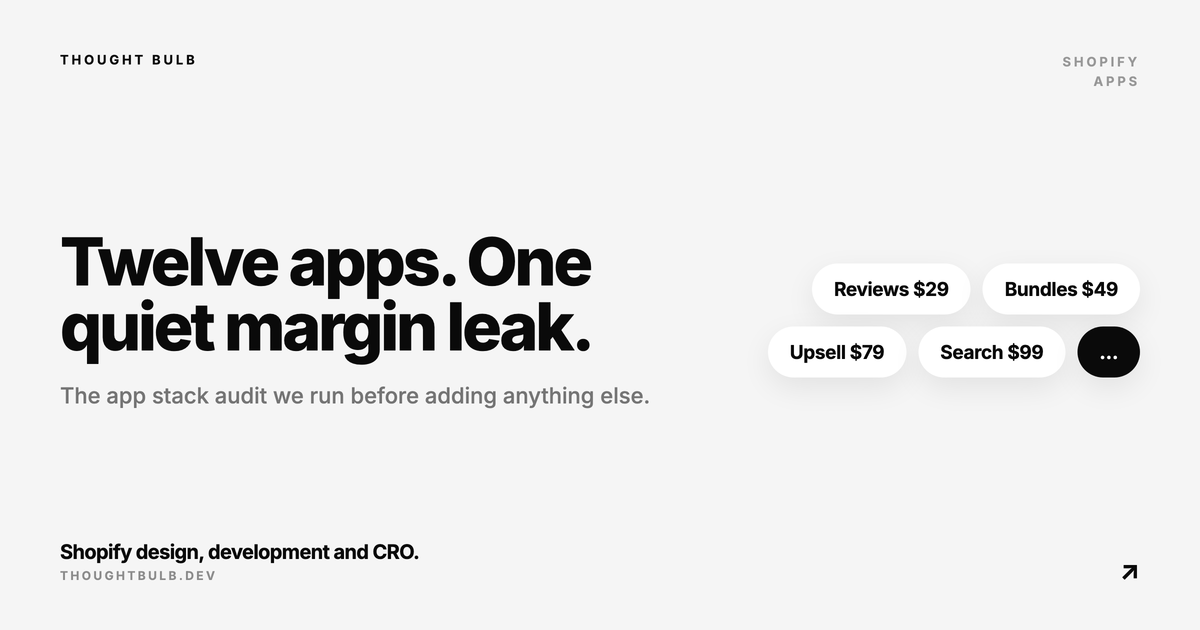
A thread reappears on r/shopify every few weeks with a different title and the same shape. A merchant lists their monthly app bill, does the maths in public, and is startled by the total. Eight to fifteen paid apps at $20 to $200 each, plus usage fees for SMS, reviews, or returns. Community threads titled 'The price of apps is completely out of control' and 'Apps have become worse than the mafia' are not subtle about the mood.
The frustrating part is that each app was a reasonable decision on the day it was installed. Nobody chooses a $900 monthly stack. They choose twelve $75 problems-solved, one at a time, over three years. Indignation does not undo that. An audit with teeth usually does.
The audit, in five passes
- ✓Inventory: list every app with its real monthly cost including usage fees, pulled from three months of invoices rather than the pricing page
- ✓Usage: for each app, name the person who used it in the last 30 days and the revenue-relevant thing it did. No name, no keep
- ✓Overlap: find apps solving the same problem twice, like two review widgets, two upsell tools, or analytics that duplicates GA4
- ✓Platform absorption: check what Shopify now does natively. Functions cover the old discount apps, native bundles exist, Flow replaces many automation tools, and Search & Discovery replaced basic filtering apps years ago
- ✓Performance: measure which apps inject render-blocking scripts on the storefront, because some apps cost you twice, in fees and in speed
"An app stack is a payroll. Every line item should have a job, a manager, and a reason it survived the last review."
— Thought Bulb
When replacing an app with code is the right call
The rule of thumb we use with clients: if an app charges a recurring fee for one stable feature (a size chart, a shipping bar, a simple product badge, a basic bundle), a one-off theme build usually pays for itself inside a year, loads faster, and cannot raise its own price. If the app ships ongoing complexity (reviews with moderation, subscriptions, loyalty maths), keep it. The recurring fee is buying maintenance more than it is buying the feature.
Put the audit on a quarterly calendar
One dramatic uninstall session feels great and changes nothing, because the same install habits rebuild the stack within a year. Book a quarterly review, require a named owner for every new app before it goes in, and set a stack budget the way you set an ad budget. The merchants who complain least about app costs are usually the ones who can defend every line, whatever the count.
Thought Bulb replaces single-feature apps with fast native theme code, audits stacks for overlap and performance drag, and builds the custom features that keep your margin where it belongs.
Book an app stack audit →