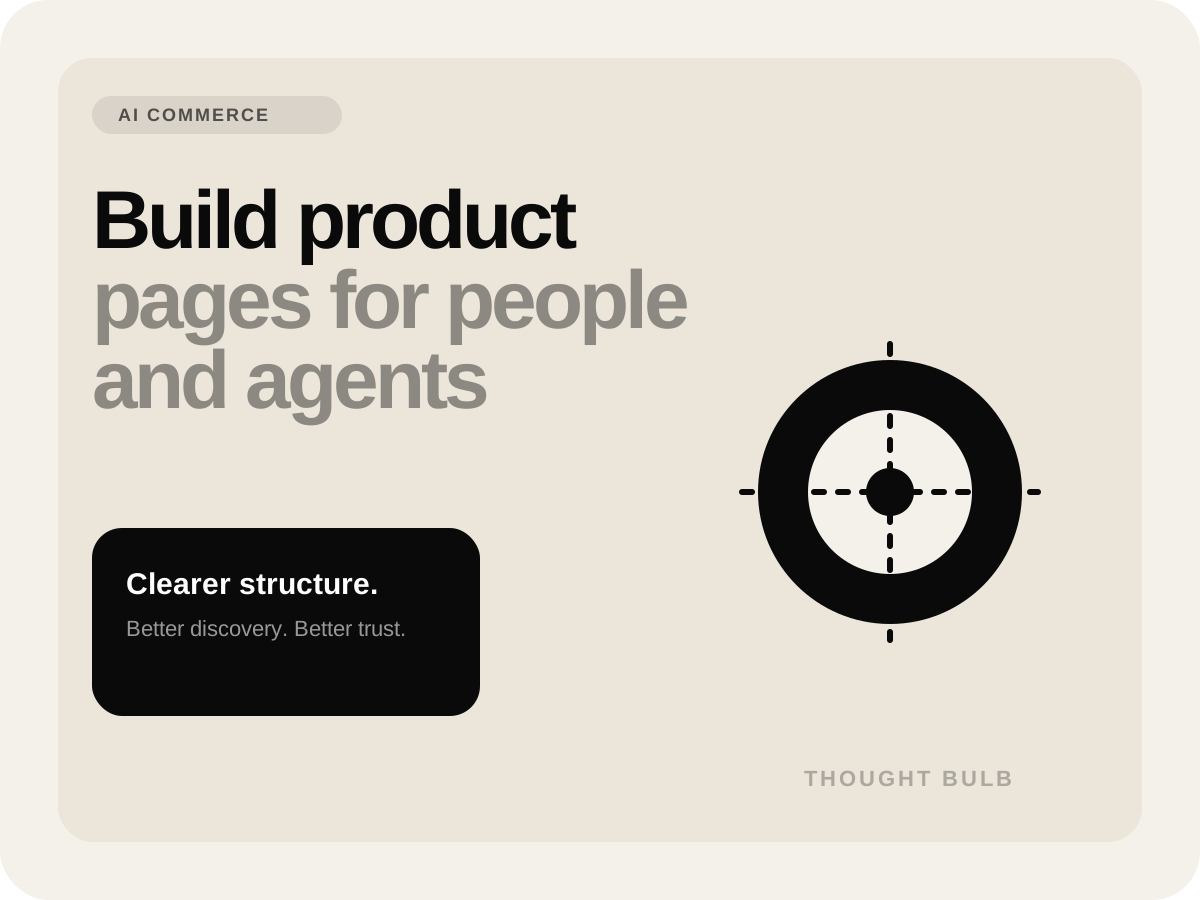
A strong product page used to be judged mostly by how well it persuaded a human. That is no longer enough. AI shopping agents are becoming a second audience with different needs: complete structured data, clear attribute coverage, reliable pricing, and markup that does not hide important information behind ambiguous components.
An agent cannot infer what you forgot to describe
People can tolerate a little ambiguity if the photography is strong and the brand feels trustworthy. Agents cannot. They compare, rank, and summarize based on what is explicitly present. If the material, dimensions, compatibility, or stock state is incomplete, your product becomes harder to recommend accurately.
What matters most on the page
- ✓Product schema that reflects real price, availability, and media without stale values
- ✓Visible attribute clarity for things like sizing, material, care, compatibility, and usage context
- ✓Semantic headings and body copy that help machines distinguish key sections from generic filler
- ✓Trust and policy signals that are easy to parse, especially around shipping, returns, and guarantees
- ✓A content model that keeps product facts consistent across page templates, feeds, and snippets
The brands that do this well are not writing for robots. They are building cleaner systems. Good machine readability usually improves human clarity too, because both audiences benefit from less ambiguity and stronger information architecture.
"The future product page still persuades people. It just needs to be legible to software at the same time."
— Thought Bulb AI Commerce Team
If you want your storefront to perform in AI-assisted discovery, start by making the product page easier to understand without guesswork. That is the layer agents reward first.