For most of the last decade, AI in ecommerce meant recommendation widgets and personalised subject lines. Useful, and incremental. What is arriving in 2026 asks something different of a store, and most Shopify brands are still not ready for it.
The shift is already happening
Customers are starting to shop through AI-native interfaces. ChatGPT browses the web. Perplexity surfaces product pages. Google's AI Overviews are taking the place of the traditional search result. Instead of typing a keyword, the shopper describes what they want and lets the agent go and find it.
That changes what a well optimised Shopify store looks like. A store built for people, with good photography, smooth scrolling and copy that persuades, may be close to invisible to an agent that is parsing structured data, reading product feeds and making a decision on the customer's behalf.
What agentic commerce actually means
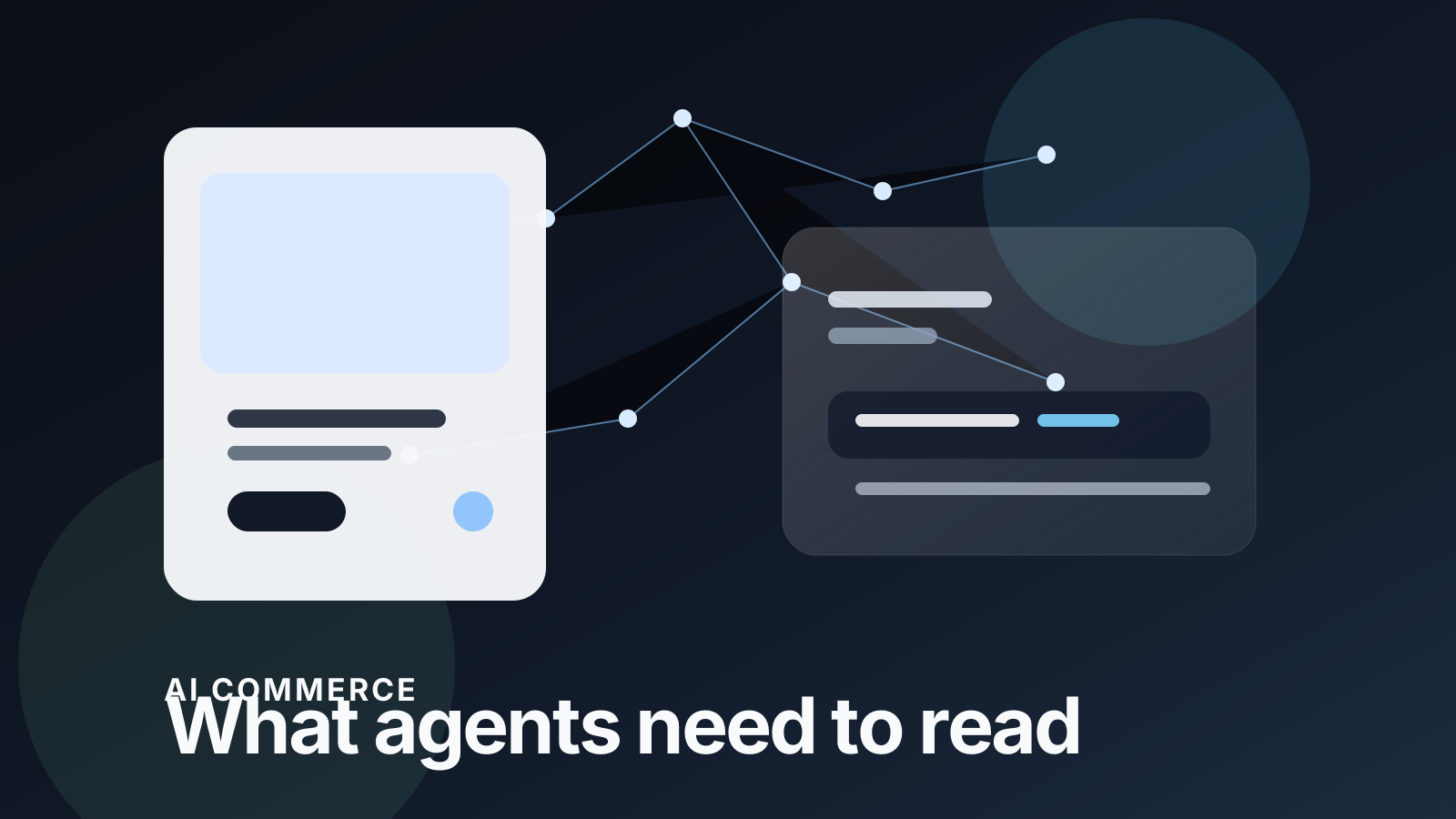
An agent shopping for a customer will do several things a human browser does not. It will read your product metafields. It will check your structured data. It will look for schema markup that says what the product is, what it costs, whether it is in stock, and how it compares to the alternatives. If that data is missing, or dirty, your product does not exist to the agent.
- ✓Product schema with complete attribute coverage (material, dimensions, compatibility)
- ✓Accurate, real-time inventory signals in your feed
- ✓Semantic HTML so agents can parse your page content correctly
- ✓Clean metafield architecture that maps to standard ontologies
- ✓Fast, crawlable storefronts, because agents do not wait for JavaScript to render
The window brands need to act in
Brands that prepare now get first pick of the lift. The ones that wait can end up at a structural disadvantage that has little to do with the product and a lot to do with the data behind it. Mobile in 2012 and page speed in 2018 went the same way. Early movers compounded the advantage, and the brands that waited paid catch-up costs.
"AI isn't going to replace your storefront. It's going to shop on your storefront on behalf of your customer. The question is whether your store is ready to be found."
— Robin Singh, Thought Bulb
What we built: Agentmatica
We built Agentmatica because we needed it ourselves. It is AI chat for ecommerce websites. It reads your store's pages and catalog, answers shipping, returns, product and order questions with a link to the page the answer came from, says so when the answer is not there, and hands the conversation over when it needs a person.
It also shows you which questions keep coming back, so the page behind them gets fixed. If you run a DTC brand on Shopify or WooCommerce and the same questions land in your inbox every day, it is free to start and takes an afternoon to set up.
Connect your site and catalog, set the boundaries and the handoff, and go live when the answers are right.
See how Agentmatica works →The questions that keep coming back are a ranked list of what your product and policy pages fail to say.
Turn support questions into page edits →And before any of it faces customers, probe it with the questions that break chat tools.
Read the pre-launch test script →