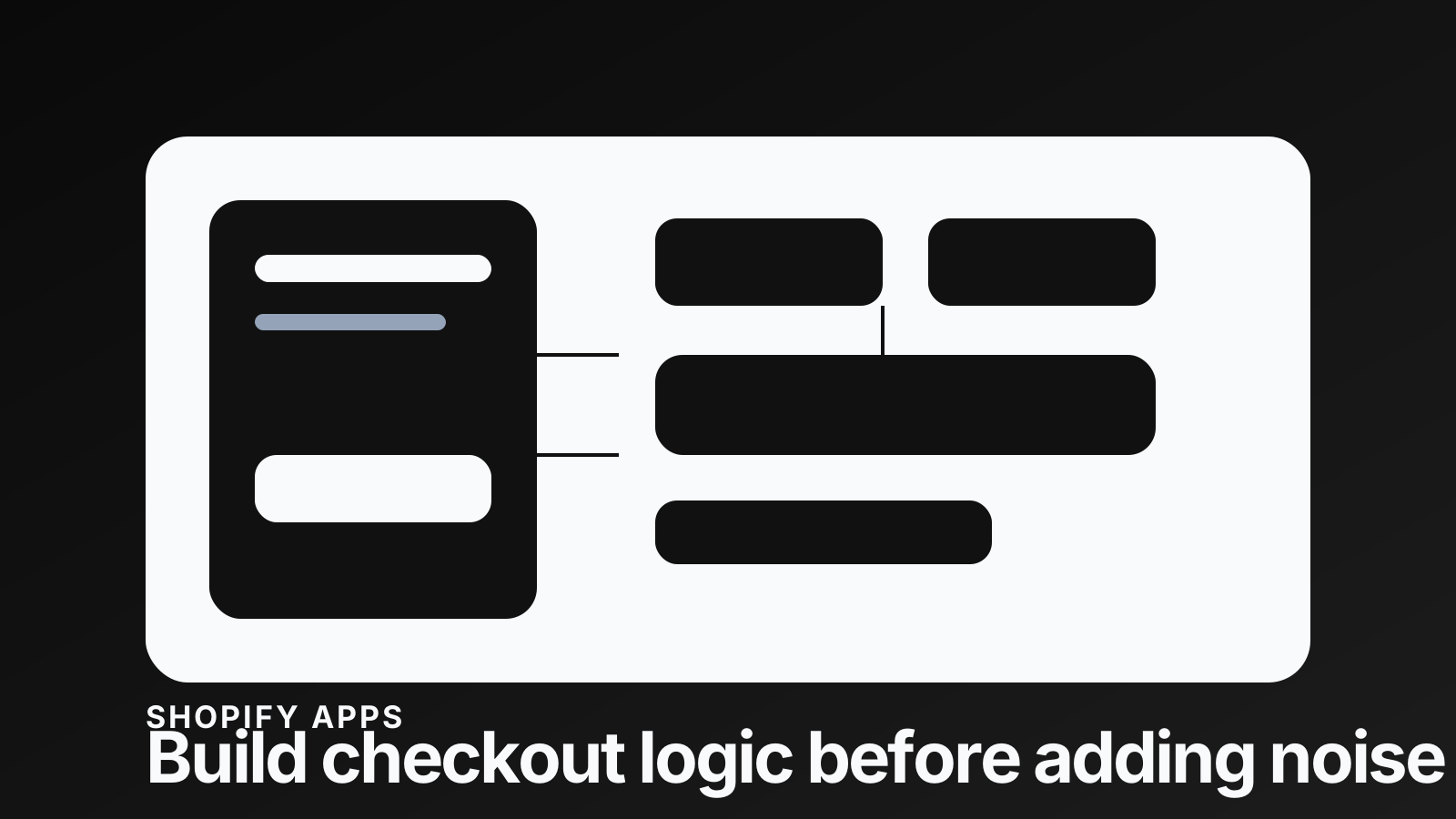
Checkout extensibility changed the quality bar for Shopify customization. The old question was whether a team could hack something into checkout. The new question is whether the thing being built actually improves the decision, the margin, or the completion rate without making the experience harder to maintain.
The highest-leverage work is usually invisible
Merchants often ask for visible widgets first because that is what stakeholders can point at. In practice, the most valuable work often happens in logic: how discounts stack, how cart conditions are validated, how shipping incentives are messaged, or how checkout nudges appear at exactly the right moment.
What is worth prioritizing
- ✓Custom discount logic that matches your real commercial rules
- ✓Validation rules that prevent error states before the customer hits them
- ✓Targeted messaging around thresholds, bundles, or shipping incentives
- ✓Checkout-side guidance that clarifies the next best action without clutter
- ✓Extension decisions that reduce support load as well as conversion friction
The wrong customization stack creates a second checkout strategy living outside the core storefront strategy. That is when teams start shipping contradictory incentives, inconsistent copy, and fragmented ownership. Functions and extensions should tighten the system, not create another one.
Where teams go wrong
They build novelty before utility. Or they replicate logic in apps, theme code, and checkout extensions at the same time. That makes launches slower and bugs harder to reason about. Checkout work needs a single source of truth just as much as the rest of the storefront does.
"If a checkout feature is interesting but not measurable, it is probably not first-priority work."
— Thought Bulb Engineering Team
Start with the rules that affect revenue and clarity. Once those are solid, the interface layer becomes much easier to justify and much easier to maintain.