Automation decisions get expensive when teams pick tools based on familiarity instead of fit. Shopify Flow is strong, but it is not a universal orchestration layer. Custom automation is powerful, but it is not automatically strategic. The goal is not to build more logic. It is to put logic in the right place.
Start with the cost of failure
If a workflow breaks, who feels it first? Merchandising, operations, CX, finance, or the customer? That answer tells you how observable and controllable the automation needs to be. Flow is excellent when the workflow is close to Shopify events and the consequences of failure are easy to inspect. It is weaker when the logic depends on outside systems, complex branching, or strong audit requirements.
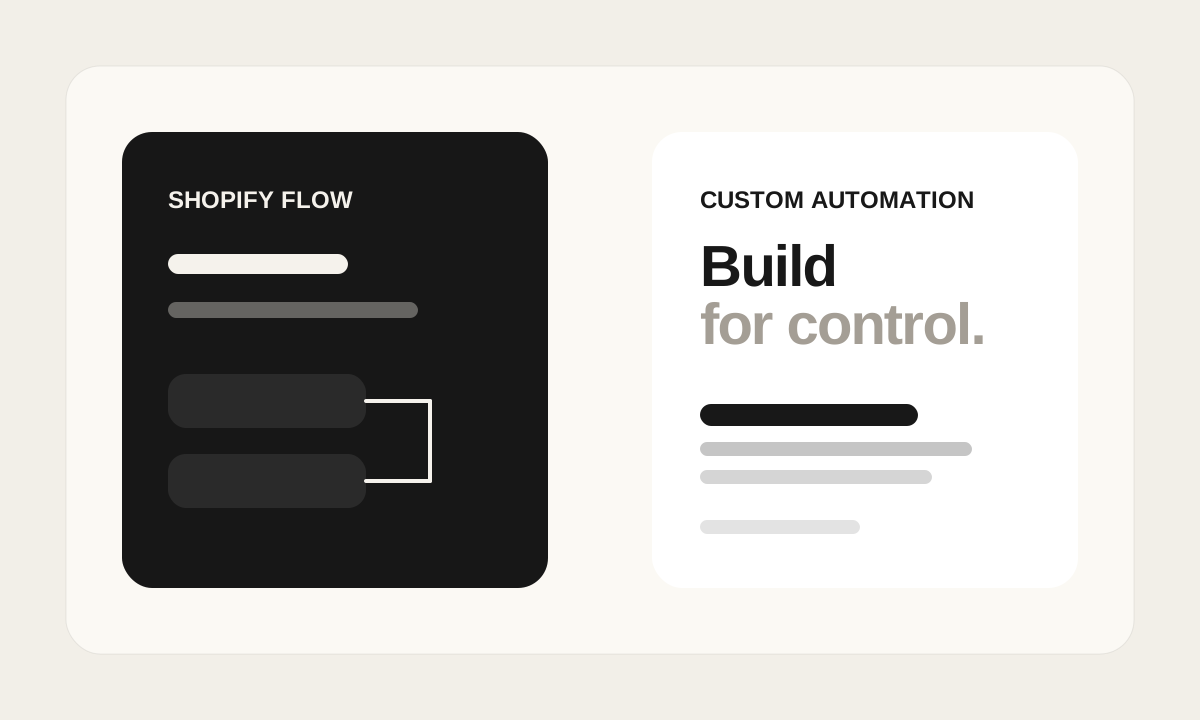
Use Shopify Flow when
- ✓The trigger and action both live largely inside Shopify
- ✓Operations teams need to understand or adjust the workflow without engineering involvement
- ✓The logic is event-driven but not deeply stateful
- ✓A clear fallback exists if the automation pauses or misfires
Build custom automation when
- ✓The workflow depends on multiple external systems or APIs
- ✓You need versioning, observability, retries, or richer business logic than Flow should carry
- ✓The automation affects customer-facing promises like stock, delivery, entitlement, or pricing
- ✓The workflow is becoming core operational infrastructure rather than a convenience layer
Teams often overuse Flow because it feels quicker to start. Then the workflow grows into a brittle maze of conditions that no one wants to own. That is usually the signal that the logic has crossed the boundary from no-code convenience into application behavior.
"If the workflow is business-critical, build for control first and convenience second."
— Thought Bulb Engineering Team
A cleaner decision rule
Use Flow to accelerate well-bounded Shopify-native operations. Use custom automation when the workflow becomes a product in disguise. That framing saves time, keeps ownership clear, and stops teams from building fragile systems just because the first version was easy to drag and drop together.