A premium brand can lose trust without ever touching its logo, palette, or photography. The damage often happens lower in the stack: sloppy spacing behavior, slow media loading, unstable interactions, generic UI states, and a storefront that feels assembled from plugins instead of directed with intent.
Premium is mostly consistency under pressure
Luxury and premium brands are not judged only by how the homepage looks in a mockup. They are judged by whether the experience holds its standard across mobile viewports, edge cases, content changes, and buying moments. If the polish falls apart when the user opens a drawer, changes a variant, or loads the PDP on a weaker connection, the brand promise weakens too.
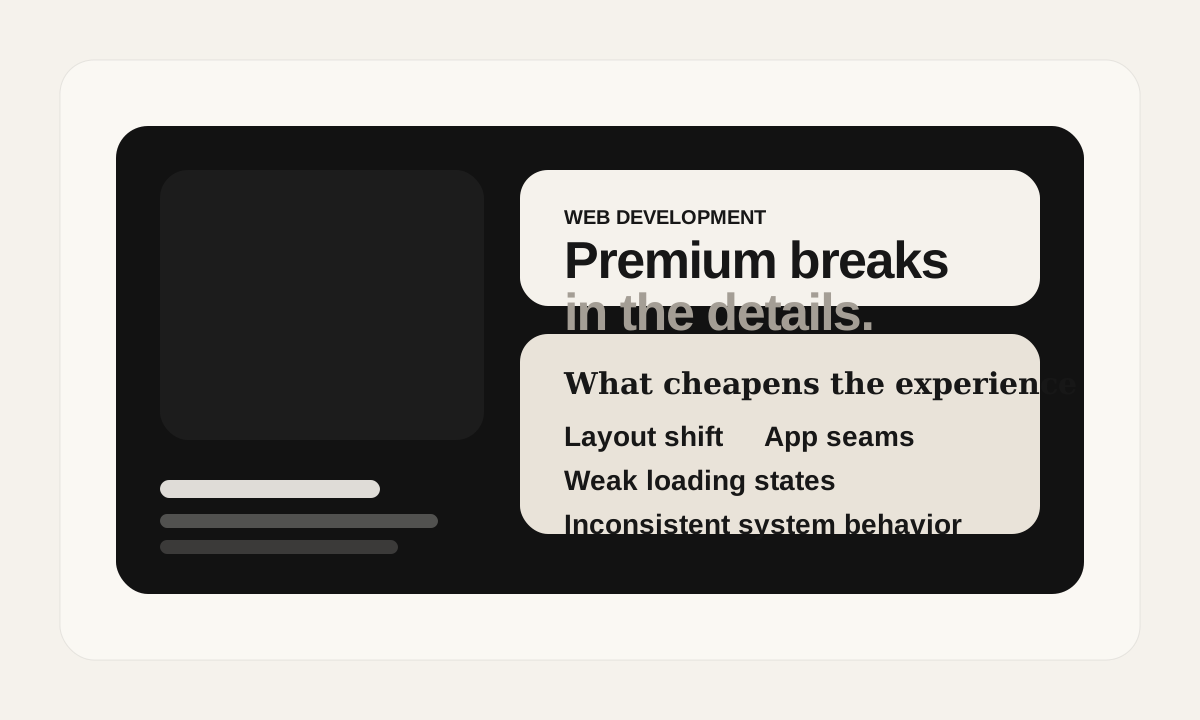
The development choices that erode premium perception
- ✓Layout shift that makes the interface feel unstable or improvised
- ✓Default app UI that clashes with the rest of the storefront tone
- ✓Weak loading, empty, and error states that feel unconsidered
- ✓Over-animated transitions that chase novelty and lose restraint
- ✓Content systems so rigid that merchandising updates break visual hierarchy
None of these problems sound dramatic in isolation. Together they create a subtle downgrade in perceived quality. Customers may never articulate why the experience feels cheaper than the brand claims, but they respond to it anyway through bounce, hesitation, and lower willingness to trust premium pricing.
"Premium is not a style layer. It is discipline expressed through the whole system."
— Thought Bulb Design Team
What to audit if your brand feels expensive but the store does not
Review the small moments first: loading, variant changes, cart behavior, typography under real content, and the seams between first-party and app-driven UI. The fastest way to make a premium brand feel more credible is often not another design pass. It is removing the technical signals that make the experience feel second-rate.