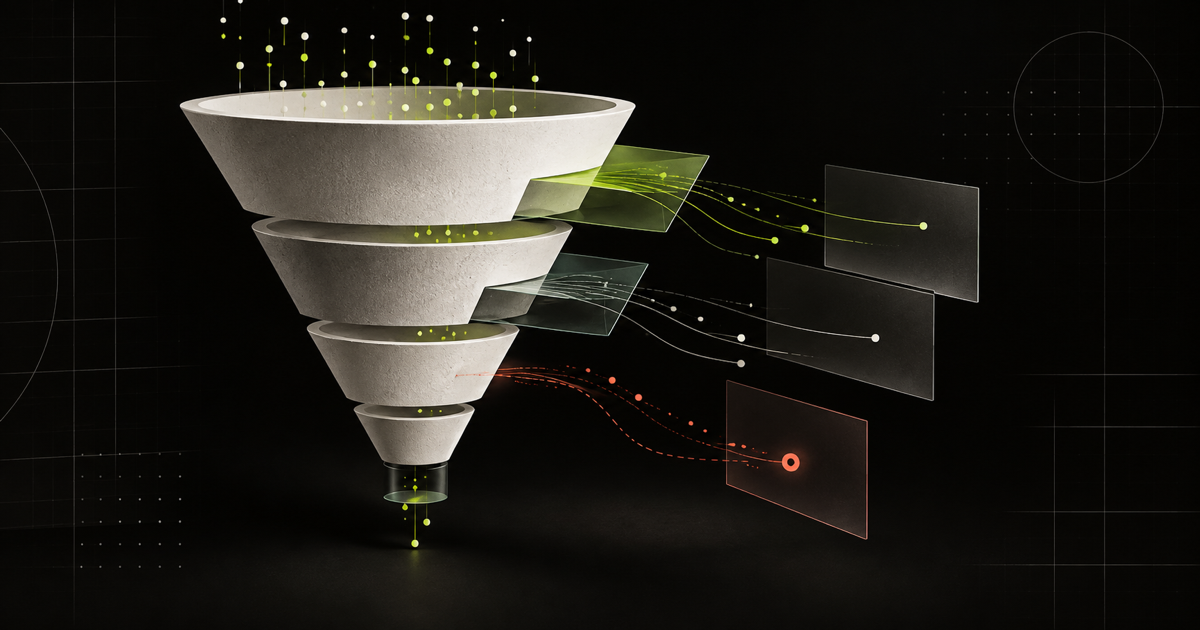
The average Shopify store converts at 1.4%. The top 20% of Shopify stores convert at 3.3% or higher. That gap — which sounds modest on paper — is the difference between a brand that's struggling and one that's scaling. The product is often identical. The traffic source is the same. The difference is almost always the storefront.
Where the leaks actually are
When we run a HiveSense CRO audit on a new client's store, we find the same three categories of problems, almost without exception. Not because brands are careless — but because these issues are invisible when you're close to the work.
1. Page speed on mobile
Google's research shows that a 1-second delay in mobile load time reduces conversions by up to 20%. Most Shopify stores are loading 40–60 third-party scripts — loyalty apps, review widgets, chat tools, analytics — each adding latency. No single script is the problem. The accumulation is. A well-architected store loads in under 2 seconds on mobile. Most don't.
2. Checkout friction
The average cart abandonment rate in e-commerce is 70%. Checkout friction is the largest single driver. Unnecessary form fields. No guest checkout option. Shipping costs revealed too late. Payment methods that don't match the customer's preference. Each of these is individually small — together, they're catastrophic. Shopify's native checkout is excellent, but it still requires deliberate optimisation.
3. Product page UX
The product page is where the purchase decision is made or lost. Customers need to understand what they're buying, why it's right for them, and how to get it — in that order, in under 10 seconds. Most product pages bury the key information, use generic photography, and have CTAs that blend into the page. Small changes here consistently produce the largest conversion lifts.
What a real rebuild produces
We recently rebuilt the storefront for a fashion DTC brand on Shopify. The challenge: a legacy Shopify 1.0 theme, 2.1-second mobile LCP, and a 4.2% conversion rate that had plateaued despite growing ad spend. The brief was a full custom Shopify 2.0 build, informed by a HiveSense audit that identified the checkout flow, mobile product pages, and image delivery pipeline as the three highest-leverage areas.
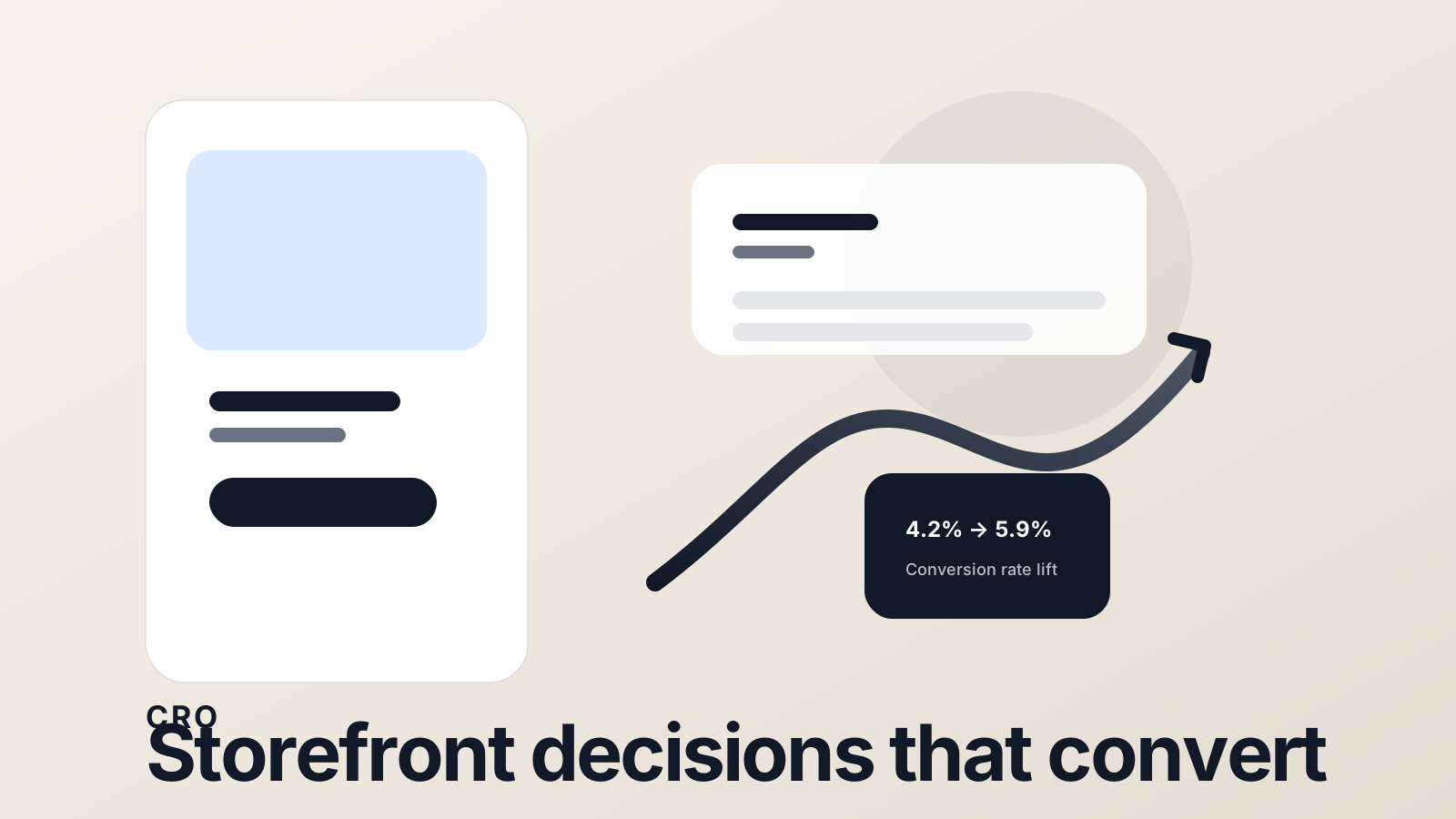
Ninety days post-launch: page speed improved 48%, bounce rate dropped 23%, and conversion rate climbed from 4.2% to 5.9%. Quarterly visits grew 30% without any increase in ad spend. The client's quote: 'We've seen a steady 60% increase in leads.' That's not a design win. That's a business outcome.
"A well-designed Shopify storefront isn't about how it looks. It's about how efficiently it turns a visitor into a customer."
— Robin Singh, Thought Bulb
The right approach for your store
Not every brand needs a full rebuild. Some of the most impactful CRO work is surgical — fixing the checkout flow, improving mobile LCP, restructuring the product page hierarchy. The right starting point is a proper audit that tells you where your actual conversion leaks are, not a rebuild proposal from an agency with a fixed template.
That's what HiveSense is designed to do. If you want to know where your store is leaving money on the table, it's a good place to start.